
How to Choose Plasma or Laser Cutting for Wear Plates
Wear plates are widely used in mining, cement, steel, and bulk material handling industries to protect equipment from severe abrasion and impact. These wear-resistant steel plates, especially Chromium Carbide Overlay (CCO) wear plates, require proper cutting methods during fabrication. Choosing between plasma cutting and laser cutting is important because it affects precision, edge quality, and production efficiency.
Understanding Wear Plate Cutting Requirements
CCO wear plates are not ordinary steel plates. Their structure includes:
- A mild steel or alloy steel base plate
- A high-hardness chromium carbide overlay layer
This makes them:
- Highly abrasion resistant
- Difficult to machine with conventional tools
- Sensitive to excessive heat input during cutting
Therefore, selecting the right cutting method is essential to avoid edge cracking, excessive heat-affected zones, or reduced performance in service.
What Is Laser Cutting for Wear Plates?
Laser cutting uses a concentrated high-energy beam to melt and vaporize material along a precise cutting path.
Key Features:
- Extremely high precision
- Narrow kerf (minimal material loss)
- Clean and smooth edge finish
- Excellent for complex shapes and fine details
Limitations:
- Less efficient on thick wear plates
- Higher equipment and operating cost
- Cutting speed decreases with harder materials
Laser cutting is generally more suitable for thin CCO wear plates or precision components where accuracy is more important than speed.
👉https://cnwearplate.com/service/
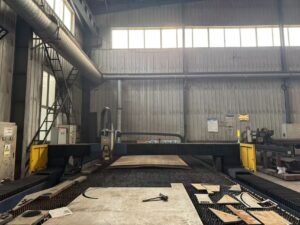
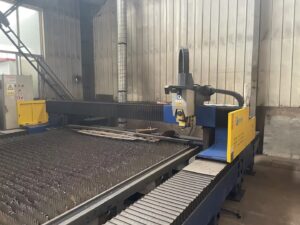
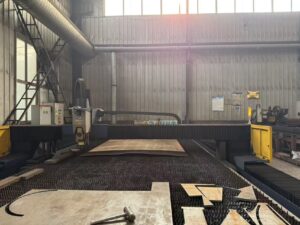
What Is Plasma Cutting for Wear Plates?
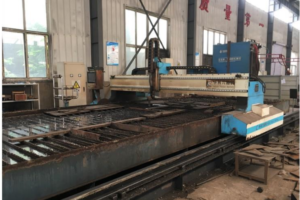
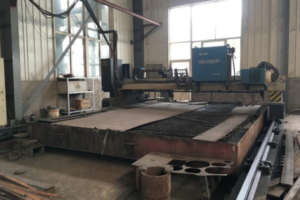
Plasma cutting uses a high-temperature ionized gas stream to melt and blow away metal.
Key Features:
- High cutting speed
- Strong capability for thick and hard materials
- Suitable for large-scale industrial fabrication
- More cost-effective for heavy-duty production
Limitations:
- Lower edge precision compared to laser
- Some heat-affected zone may occur
- May require secondary finishing for tight tolerances
Plasma cutting is widely used in heavy wear plate fabrication, especially for mining and bulk material handling equipment.
👉https://cnwearplate.com/service/
Plasma vs Laser Cutting: Key Comparison
When choosing between plasma and laser cutting for wear plates, several factors should be considered:
1. Material Thickness
- Laser cutting: Best for thin plates
- Plasma cutting: Better for medium to thick plates
2. Cutting Precision
- Laser cutting: High precision, tight tolerances
- Plasma cutting: Moderate precision, suitable for structural parts
3. Production Efficiency
- Laser cutting: Slower for thick materials
- Plasma cutting: Faster overall in heavy fabrication
4. Cost Efficiency
- Laser cutting: Higher investment and maintenance cost
- Plasma cutting: Lower operational cost
5. Application Type
- Laser cutting: Small parts, precision components
- Plasma cutting: Large wear parts, heavy-duty equipment
How to Choose the Right Cutting Method
The decision depends mainly on your application requirements:
Choose Laser Cutting If:
- You need high precision parts
- The wear plate is relatively thin
- The design is complex or detailed
- Material waste needs to be minimized
Choose Plasma Cutting If:
- You work with thick CCO wear plates
- Production speed is a priority
- Cost efficiency is important
- Parts are used in heavy-duty environments
In many industrial applications, both methods are used together depending on different stages of fabrication.
Final Conclusion
There is no universal “best” method between plasma and laser cutting for wear plates.
- Laser cutting is best for precision, accuracy, and complex designs.
- Plasma cutting is best for speed, thickness handling, and cost efficiency.
For manufacturers working with Chromium Carbide Overlay wear plates, the optimal choice depends on balancing performance requirements, production scale, and budget.
Understanding these differences helps improve fabrication quality, reduce material waste, and ensure better long-term wear resistance performance in real-world applications.
👉https://cnwearplate.com/service/
Related Guide
This content belongs to the Wear Plate Guide Hub, where you can explore all topics related to wear-resistant steel solutions.
🔗 Back to Hub: Wear Plate Guide