
CCO Plate Flatness Issues: Causes & Solutions
Introduction
CCO plate flatness issues are a common challenge during fabrication, cutting, and installation of wear-resistant materials.
For many customers processing plates in-house, even slight deformation can lead to serious problems such as poor cutting accuracy, misalignment, and welding difficulties.
As a professional 👉 CN Wear Plate, we understand that flatness is not just a quality indicator—it directly affects your production efficiency and final performance.
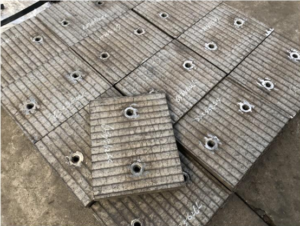
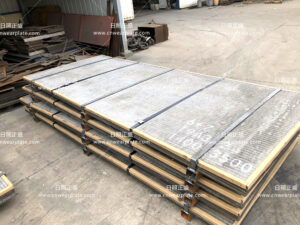
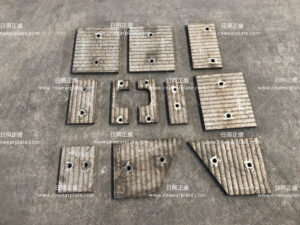
Why CCO Plate Flatness Matters
Flatness plays a critical role in downstream processing. When CCO plate flatness issues occur, they can result in:
- Inaccurate cutting dimensions
- Assembly misalignment
- Welding inconsistency
- Increased installation time
In applications such as liners, chutes, and wear components, even small deviations can affect performance and service life.
Common CCO Plate Flatness Issues in Processing
In real production environments, CCO plate flatness issues typically appear as:
- Plate warping or bending
- Edge lifting after cutting
- Uneven surfaces affecting fit-up
These problems are especially noticeable when high precision is required.
What Causes CCO Plate Flatness Issues?
1. Thermal Stress from Overlay Welding
CCO plates are manufactured by welding a chromium carbide layer onto a mild steel base.
This process involves high heat input followed by rapid cooling, which creates internal stress due to uneven expansion and contraction.
2. Different Material Properties
The overlay layer and base steel have different physical characteristics.
This leads to residual stress buildup, which is one of the main causes of CCO plate flatness issues.
3. Handling and Storage Conditions
Improper handling can worsen flatness problems, including:
- Incorrect stacking
- Uneven support
- External bending during transportation
These factors often amplify existing stress inside the plate.
Does Cutting Direction Affect Flatness?
Yes, cutting direction has a significant impact.
When cutting starts from the base steel toward the hardfacing layer—especially with conventional equipment—the final stage may lack stability.
This often leads to incomplete cuts, rough edges, and increased deformation.
Best Cutting Methods for CCO Plates
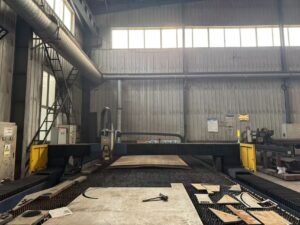
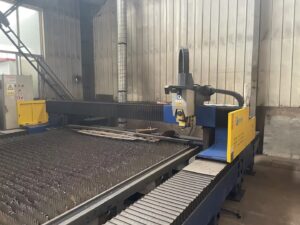
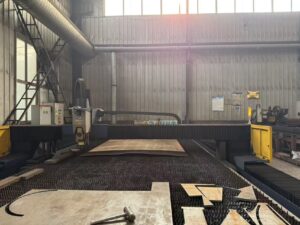
Laser Cutting Advantages
Laser cutting is the preferred method to reduce CCO plate flatness issues, offering:
- Minimal heat distortion
- Clean and precise edges
- Better dimensional accuracy
- Consistent results for batch production
Tips for Non-Laser Cutting
If laser cutting is not available, follow these recommendations:
- Start cutting from the hardfacing side
- Apply preheating when necessary
- Fix the plate securely before cutting
- Avoid dragging or bending during setup
These steps can effectively reduce processing defects.
How CN Wear Plate Helps Solve Flatness Issues
At CN Wear Plate, we focus on both product quality and real-world usability.
We provide:
- Controlled welding processes to minimize internal stress
- Strict flatness inspection before delivery
- Customized wear plate solutions
- Technical guidance for cutting and fabrication
👉 Explore CN Wear Plate to learn more about our products and services.
Conclusion
While CCO plate flatness issues cannot be completely eliminated due to the nature of composite materials, they can be effectively controlled.
By understanding the causes and applying the right processing methods, manufacturers can significantly improve cutting accuracy, assembly efficiency, and overall performance.
If you are facing similar challenges, working with an experienced supplier can make all the difference.
👉 Visit CN Wear Plate for professional support and customized wear solutions.
Related Guide
This content belongs to the Wear Plate Guide Hub, where you can explore all topics related to wear-resistant steel solutions.
🔗 Back to Hub: Wear Plate Guide