
How to Evaluate Chromium Carbide Overlay Plate
Chromium carbide overlay plates protect industrial equipment from heavy abrasion and impact, and choosing a high-quality plate directly extends equipment life and cuts maintenance costs. However, not all CCO plates deliver consistent performance in real working conditions. Below are five key dimensions to help you evaluate any plate confidently.
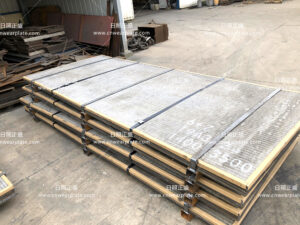
1. Chromium Carbide Overlay Plate Microstructure & Composition
First, check the density and uniform distribution of chromium carbide crystals. Premium plates hold 30–50% carbide volume for stable long-term wear resistance. For example, fine evenly spread carbides maintain performance as the surface wears down. Because uneven carbide clusters cause rapid local wear and early product failure.
2. Chromium Carbide Overlay Plate Hardness & Abrasion Performance
Hardness is a basic indicator, but uniformity matters more than one single value. High-grade CCO plates reach HRC 58–65 with under 3 HRC surface deviation. For objective comparison, refer to official ASTM G65 standard abrasion test reports. Top-performing plates show less than 0.20 g weight loss after 6,000 test cycles.
3. Metallurgical Bonding Strength of Two Layers
The bond between overlay and base plate defines reliability under impact loads. Reliable plates achieve full metallurgical fusion instead of weak mechanical adhesion. You can inspect cross-sections for interface gaps, delamination or hidden cracks. Because poor bonding is the top cause of sudden overlay spalling in heavy use.This is a core quality standard for any reliable chromium carbide overlay plate.
4. Plate Flatness and Fabrication Adaptability
Good flatness ensures smooth installation and even stress during long operation. Quality plates control thermal distortion well after the overlay welding process. Furthermore, they support plasma, laser and waterjet cutting without alloy damage. They also work with custom shapes, hole patterns and different assembly methods.
5. Chromium Carbide Overlay Plate Thickness & Application Matching
A thicker overlay layer is not always the best choice for a chromium carbide overlay plate in every application. For light-impact sliding abrasion, a thicker overlay delivers longer service life. For high-impact ore chutes, a thicker base absorbs shock and prevents cracking. A trusted supplier will recommend the ideal ratio for your specific working conditions.
Final Thoughts
All in all, high-quality CCO plates deliver far greater value than low-cost options. They reduce unexpected shutdowns, cut replacement labor and stabilize production. Partnering with an experienced supplier ensures you get the most cost-effective solution. Our technical team is ready to help you select the perfect wear plate solutions for your needs.